Permit Application Streamlining Process
Research-led improvements to a state permitting process where returned applications, unclear requirements, and workflow confusion created friction for applicants and reviewers.
Research
interviews and surveys across applicant perspectives
Synthesis
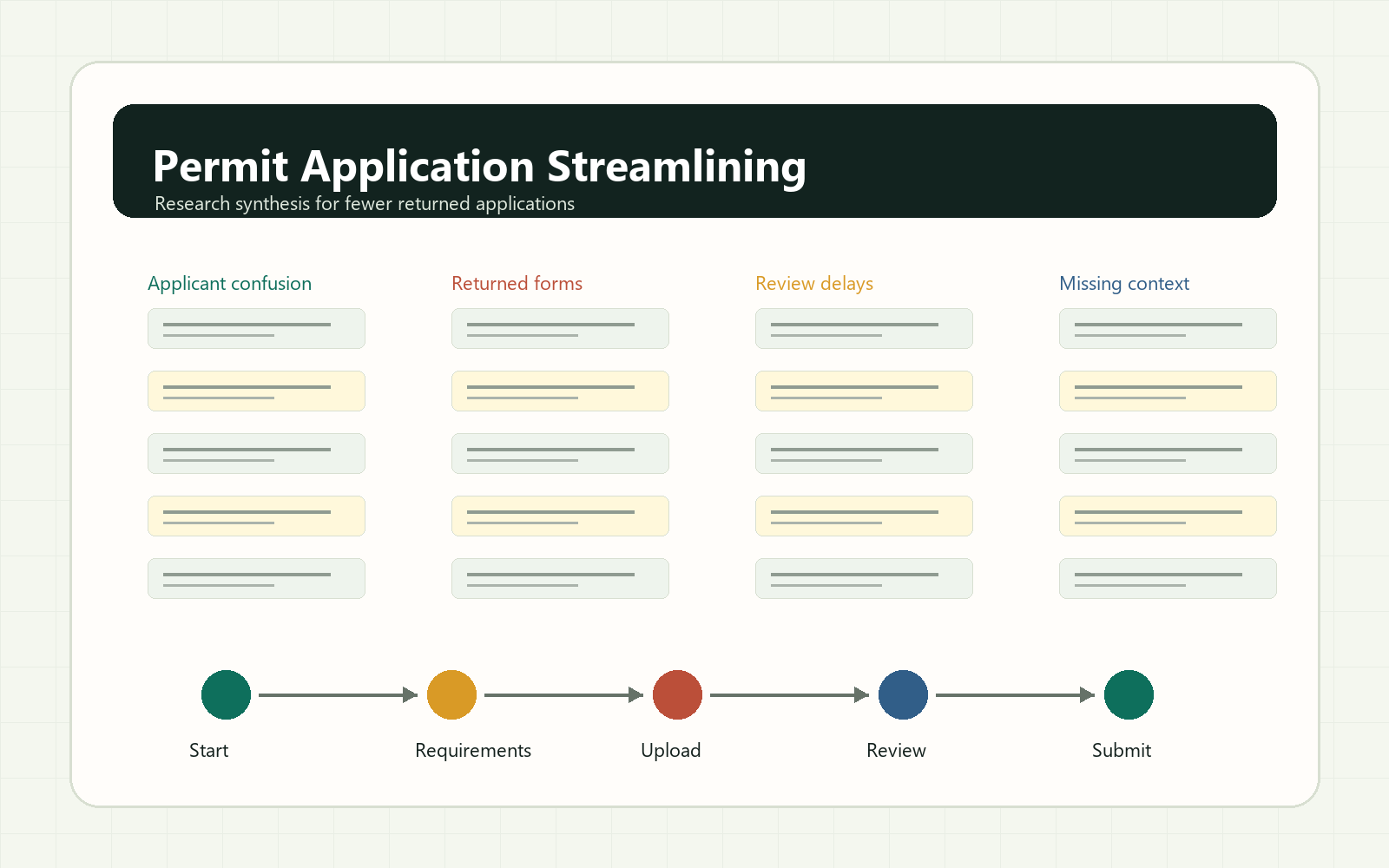
affinity mapping to uncover recurring workflow breakdowns
Alignment
stakeholder-ready findings and process recommendations
The redesigned direction focused on plain-language hierarchy, a clearer purchase path, stronger accessibility support, and mobile-friendly patterns.
Outcome summary
Identified friction points in a complex permit application process and translated qualitative research into personas, journey maps, problem statements, and stakeholder recommendations.
Project Overview: Improving Permit Applications
I focused on improving the user experience within a state permit application process, with an emphasis on reducing confusion, incomplete submissions, and avoidable returns. The work centered on understanding where applicants struggled and how the process could become clearer.
Challenge Identification: Reducing Returned Applications
The application process created friction for users and reviewers. Returned applications signaled that users were missing information, misunderstanding requirements, or encountering unclear steps inside the workflow.
User Insights: Understanding Applicant Perspectives
I engaged with different customer segments through interviews and surveys to understand how people experienced the process. These conversations revealed that applicants had different levels of familiarity, confidence, and tolerance for complexity.
Role and Contributions: Defining My Impact
As a UX Designer, I conducted user research, synthesized qualitative data, created personas, developed journey maps, and translated findings into structured problem statements. I also presented research findings to stakeholders so the team could align on the highest-friction areas. members could create more consistent content and interfaces.
Constraints and Considerations: Working Inside A Complex System
The work took place within a compliance-driven environment where policy, forms, systems, and internal review processes all shaped the user experience. The challenge was to recommend improvements that respected those constraints while still reducing unnecessary friction.
Approach: Making The Process Visible
I used affinity mapping to separate isolated complaints from recurring workflow issues. Journey mapping then helped show where applicants became uncertain, where expectations broke down, and where internal review needs were not clearly communicated.
- Conducted user interviews and surveys.
- Synthesized qualitative findings through affinity mapping.
- Created personas and journey maps to clarify recurring issues.
Solution: Research-Backed Recommendations
The project produced recommendations for improving the permitting experience and reducing common submission issues. The work helped connect qualitative findings to operational outcomes that mattered to both applicants and internal reviewers.
Conclusion: Commitment To User-Centered Design
This project strengthened my belief that even highly regulated systems can become easier to use when teams make user needs, policy requirements, and process breakdowns visible together.